
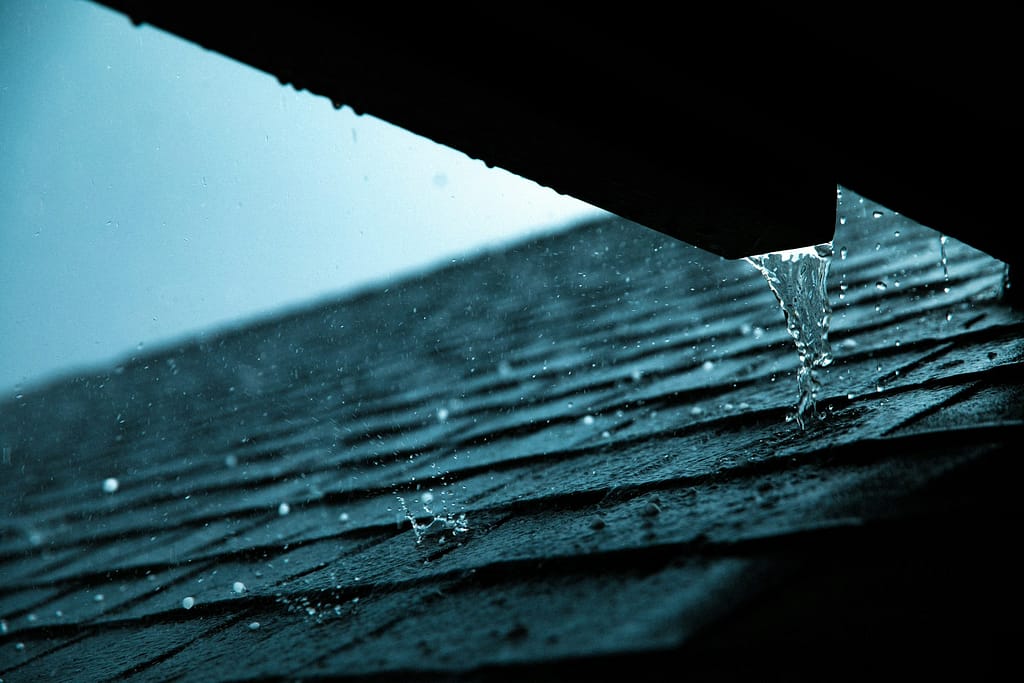
Summer storm season affects homes across Kansas, Nebraska, and Colorado differently. One afternoon the sky turns dark, hail rattles the windows for ten minutes, and then the sun comes back out like nothing happened. Most homeowners walk outside and take a quick glance up at their roof. After seeing no obvious signs of damage like holes or missing shingles, they go on with their day. That 2-second glance is exactly how hail and wind roof damage gets missed, resulting in a ceiling stain or a denied insurance claim. This article covers what actually happens to a roof during a hailstorm or high wind event, the damage that hides in plain sight, and why waiting for a visible leak is the most expensive decision a homeowner can make.
How High Winds Damage a Roof
The edges and corners of a roof are the most susceptible to wind damage. Uplift pressure concentrates there first, pulling shingles loose from the seams inward. With wind gusts of 45 miles per hour, shingle edges can start to lift and flex. Sustained gusts can lift and crack shingles at higher wind speeds, causing severe damage to shingles and their protective layer. That compromised shingle ages faster and loses the flexibility that keeps a roof watertight.
Tree limbs, loose gutters, and anything else picked up by the wind can scuff, puncture, or tear shingles as it skips across the roof deck. This kind of damage doesn’t always show up as a glaring hole. Often it’s not even visible from the driveway.
How Hail Damages a Roof
Hail works differently than wind, but the outcome is the same: a compromised roof that can still look fine from the ground. A hailstone with enough energy fractures the fiberglass mat inside the shingle, and because that fracture starts on the underside and works upward, the surface can look nearly untouched while the shingle beneath is broken. You can’t confirm that from the driveway, but you can spot the evidence that justifies a closer look, since dents in gutters, downspouts, flashing, and window screens are what adjusters check first to confirm damaging hail actually fell.
Kansas, Nebraska, and Colorado sit inside what meteorologists call hail alley, the stretch of the country between the Rockies and the Plains that sees more hailstorms than almost anywhere else in the United States. Homeowners in Manhattan, Salina, Topeka, Lincoln, Omaha, Denver, and Estes Park are not dealing with a rare weather event. They are dealing with a near-annual risk that most other parts of the country never have to think about.
On July 4, 2026 alone, storm spotters logged 2.25 inches of hail in Argonia, Kansas, 2.50-inch hail near Paxton, Nebraska, and 55 mph wind gusts outside Eckley, Colorado — a total of 247 hail, wind, and tornado reports across 31 states that day. That’s not a rare, headline-grabbing incident. That’s a normal Tuesday during hail alley storm season.
The Hidden Damage Most Homeowners Miss
Some of the most serious hail and wind roof damage is invisible without a trained eye and the right vantage point.
Granule loss is the most common example. Those small stone granules protect the asphalt underneath from UV rays, and once they wash into the gutters, the shingle underneath starts breaking down faster than it should.
Bruised shingles are another one. Press a thumb against a suspected impact point and a damaged shingle often feels soft or spongy, a sign the internal mat has already cracked even though the surface looks intact.
Granule halos are the third. They’re faint circular rings around a hail strike where granules have loosened but not yet fallen away. It looks like nothing today and becomes a failure point during the next freeze-thaw cycle or windstorm.
This is exactly why storm damage does not always show up as a leak right after the event. It can take twelve to eighteen months for a hail-damaged roof to start letting water through, long after most homeowners have stopped thinking about that one bad afternoon in July.
Why Waiting Is the Expensive Mistake
Here is the part that catches homeowners off guard: most insurance policies have a filing deadline, often one year from the date of the storm. If a roof does not show a leak until month fourteen, the window to file a claim may already be closing, and the homeowner ends up paying for a full repair or replacement out of pocket.
There is a second cost to waiting. Insurance settlements are often based on actual cash value, which factors in the age and condition of the roof at the time of the claim. A roof that gets inspected and documented shortly after a storm is in a much stronger position than one that sits untouched for a year while the damage quietly worsens. Waiting does not save money. It actually ends up costing more. That is also why it pays to call a roofer before filing a claim, so any damage gets documented correctly before an adjuster ever sets foot on the roof.
What a Professional Inspection Actually Checks
A trained inspector looks at more than the shingles. They look at the flashing around chimneys and vents, the sealant strips holding shingle courses together, gutters and downspouts for dents and granule buildup, and any soft spots that indicate a bruised or cracked mat underneath. Interior signs matter too, including ceiling stains or peeling paint that can point to a slow leak from the roof deck.
At Weddle & Sons Roofing, we’ve been offering free, no-pressure roof inspections to homeowners across Kansas, Nebraska, and Colorado since 1999, and we work directly with insurance carriers on storm damage claims from the first inspection through final payment. That means every bruised shingle, cracked seal, and dented gutter gets documented in detail, so nothing gets missed when an adjuster does a quick walk-around.
Frequently Asked Questions
How soon after a hailstorm should I get my roof inspected? As soon as it is safe to do so, ideally within a few weeks. Hidden damage does not always show up right away, but documenting it early strengthens an insurance claim and prevents a small issue from becoming a bigger repair.
Can I just look at my roof from the ground to check for damage? A ground-level look can catch obvious problems like missing shingles or dented gutters, but it will miss bruised shingles, granule loss, and damaged flashing or sealant issues. Those require a closer inspection.
Will my homeowners insurance cover hail and wind roof damage? Most policies do, though coverage details, deductibles, and filing deadlines vary by carrier. Reviewing the policy and filing promptly after a storm gives homeowners the strongest position for a fair settlement.
What if I don’t see a leak, is my roof still okay? Not necessarily. Hail-damaged roofs can take twelve to eighteen months to develop a visible leak. A professional inspection is the only reliable way to confirm whether a roof came through a storm undamaged.
Bottom line for homeowners:
- A ground-level glance won’t catch bruised shingles, granule loss, or damaged flashing and weatherproofing
- Hidden hail damage can take 12–18 months to become a visible leak
- Most insurance policies give you one year from the storm date to file
- An early, documented inspection puts you in a stronger claim position than waiting
Protect Your Home Before the Next Storm Rolls In
Storm season across Kansas, Nebraska, and Colorado will bring more hail and high wind events before summer is over. Our free inspection takes the guesswork out of determining if your roof is hiding signs of storm damage, and we handle the insurance claims process from start to finish if repairs are needed. Schedule a free inspection today and get ahead of the damage before it becomes a leak.
