
Why Roof Maintenance Now Can Prevent Bigger Repairs Later
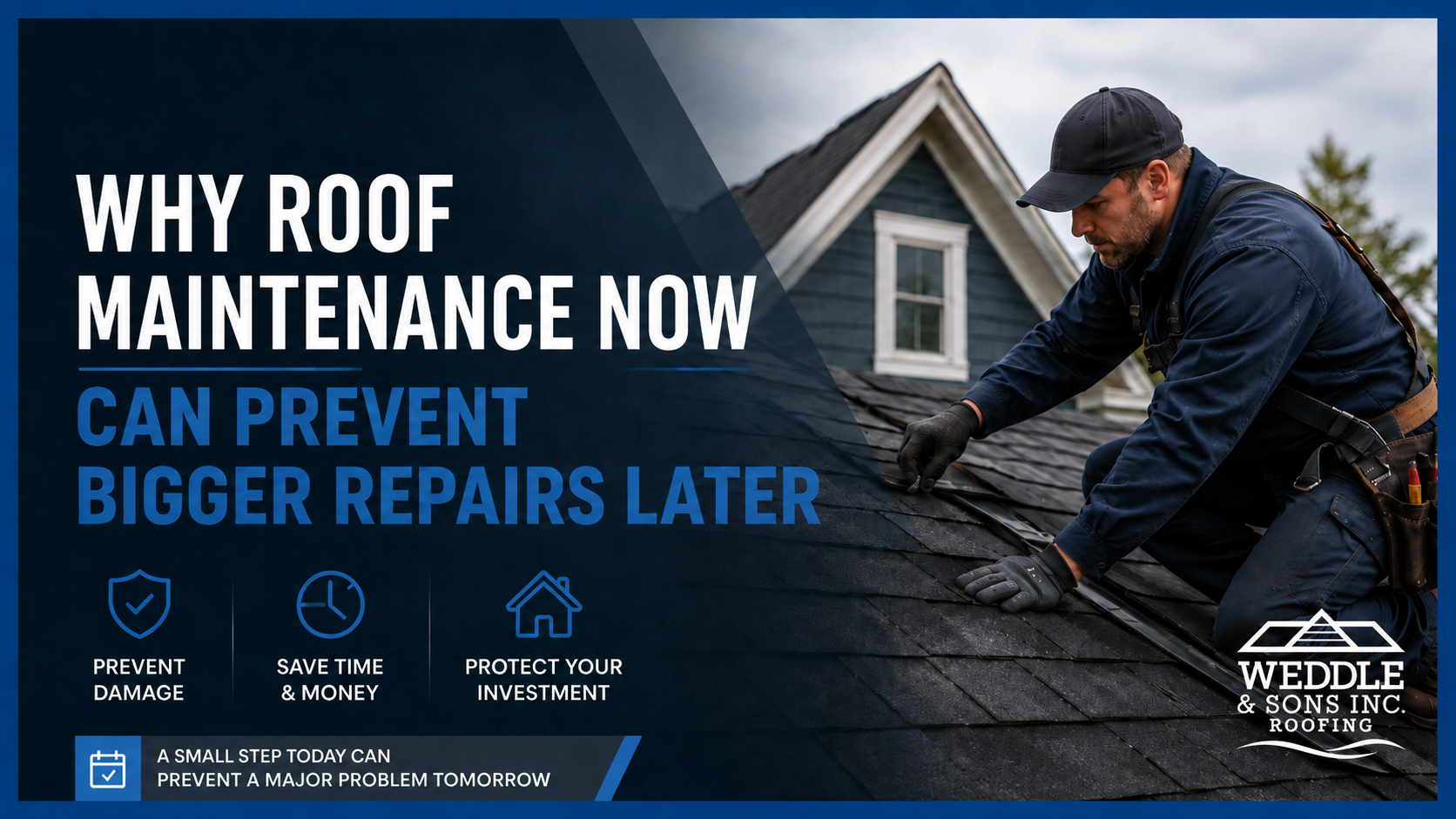
Most homeowners do not think about roof maintenance until something looks wrong. When the roof is doing its job, it is easy to forget it is there. But your roof is one of the main systems protecting your home from rain, wind, hail, snow, heat, and everyday weather exposure.
The simple truth is this: taking care of your roof now can help prevent bigger repairs later. A roof does not have to be actively leaking to need attention. Many costly roofing problems begin quietly, and small issues are usually easier to address when they are caught early.
That does not mean every roof problem is urgent or that every storm leads to a replacement. It means homeowners usually have more control when they know what condition their roof is in before water has already found its way inside.
Roof Maintenance Protects More Than Shingles
It is easy to think of your roof as only the shingles you see from the street. In reality, your roof protects much more than the outside of your home.
A healthy roof helps protect your attic, insulation, roof decking, drywall, framing, electrical systems, personal belongings, and interior finishes. Once water gets past the roof system, the repair is no longer just a roofing issue. It can become an attic issue, a ceiling issue, a wall issue, or a structural issue.
That is why preventive care matters. Roof maintenance is not just about keeping shingles in place. It is about protecting the home underneath them.
When your roof is in good shape, it quietly directs water away from vulnerable areas. When something is cracked, lifted, loose, clogged, or worn, water can find openings that may not be obvious from the ground. Over time, those small openings can create damage in places homeowners rarely inspect.
Small Roof Problems Often Start Quietly
Some roofing problems are obvious. A missing shingle in the yard after a storm or a brown stain on the ceiling will usually get attention quickly. Other problems are more subtle.
A cracked pipe boot may let in a small amount of water around a plumbing vent. Damaged flashing near a chimney or wall may allow moisture to work behind the surface. Exposed nail heads, loose ridge caps, granule loss, or lifted shingles can all create weak spots. Clogged gutters can cause water to back up where it should not sit.
These issues may not cause an immediate drip in the living room. Water has a way of traveling farther than homeowners expect. It can move along framing, soak into insulation, freeze and expand during cold weather, or sit unnoticed in an attic before a ceiling stain appears.
That is why a roof does not have to be leaking inside the home to deserve attention. Often, the best time to address a roofing problem is before it becomes visible indoors.
The Cost of Waiting: How Roof Damage Spreads
Waiting on a small roof repair can reduce your options. When an issue is found early, the repair may be limited to a specific area. A contractor may be able to replace a damaged boot, repair flashing, secure loose shingles, address exposed fasteners, or clear a drainage problem.
When water has more time to travel, soak, freeze, expand, or sit unnoticed, more parts of the home can be affected. What started as a roof repair may eventually involve damaged decking, wet insulation, stained drywall, peeling paint, trim repairs, mold concerns, or wood rot.
That does not happen in every case, and not every minor roof issue turns into a major repair. But we have seen enough homes to know that catching problems early usually gives homeowners better options. The longer moisture is allowed to move through the home, the harder it can be to know exactly where the damage stops.
Preventive care gives you more control over future repairs. It helps you make decisions while the problem is still manageable, instead of reacting after water has already caused damage inside the home.
Signs of Roof Damage Homeowners Should Watch For
You do not need to be a roofing expert to notice when something may deserve a closer look. Some warning signs can be seen from the ground or inside the home.
Watch for:
Missing, lifted, cracked, or curling shingles
Shingles or roof debris in the yard after wind
Granules collecting near downspouts or in gutters
Damaged or loose flashing around chimneys, walls, or roof edges
Cracked rubber boots around roof pipes
Loose ridge caps or exposed nail heads
Gutters that are clogged, sagging, or overflowing
Soft-looking or sagging areas on the roof
Stains on ceilings or walls
Musty smells in the attic
Damp insulation or visible moisture in attic spaces
Some damage is easy to miss from the ground, especially on steeper roofs or in valleys, around vents, near chimneys, and along transitions where rooflines meet walls. If something looks different after a storm, or if it has simply been a while since the roof was checked, a professional inspection can help you know where things stand.
Why Storm Damage Roof Inspections Matter
Midwest roofs take a lot of weather. Wind, hail, heavy rain, snow, ice, heat, and falling limbs can all affect the way a roof performs. Sometimes storm damage is obvious right away. Other times, the roof may look mostly fine from the driveway but still have bruised shingles, loosened flashing, lifted materials, or small openings that can worsen over time.
A storm damage roof inspection does not mean your roof automatically needs to be replaced. The goal is not to replace every roof early, but to catch issues before they cause avoidable damage.
After strong wind, hail, or heavy rain, an inspection can help determine whether your roof is still doing its job. If everything looks good, you get peace of mind. If there is damage, you can decide what to do next with clear information instead of guessing.
A Professional Roof Inspection Helps You Know Where Things Stand
There is value in knowing the condition of your roof before there is an emergency. A professional roof inspection looks at the full roof system, not just the areas that are easy to see from the ground.
That may include shingles, flashing, pipe boots, vents, ridge caps, valleys, gutters, roof edges, attic signs, and areas where water is most likely to enter. An experienced roofer knows where problems often begin and how small issues tend to spread.
The best outcome may be hearing that your roof is in good shape and no immediate work is needed. If a small repair is recommended, you can address it before it affects more of the home. If larger concerns are found, you can plan ahead instead of being caught off guard.
That kind of clarity is one of the biggest benefits of routine roof maintenance. You are not making decisions based on fear. You are making them based on what is actually happening on your roof.
Common Misconceptions About Roof Maintenance
One common misconception is that no leak means no problem. In reality, water may be entering a small area long before it reaches a ceiling or wall.
Another misconception is that all roof damage is obvious. Some issues are hidden around vents, flashing, valleys, or attic spaces where homeowners do not normally look.
Some homeowners also worry that scheduling an inspection means they will be pushed toward a new roof. A good inspection should help you understand your options. Sometimes the right answer is a small repair. Sometimes it is routine maintenance. Sometimes it is simply keeping an eye on the roof and checking again later.
Roof maintenance is not about creating unnecessary work. It is about protecting your home and avoiding preventable damage when possible.
Protecting Your Home Starts Before There Is a Leak
Your roof protects more than the outside of your home. It helps protect the structure, comfort, value, and everyday livability of the house. When small roofing problems go unnoticed, they can affect areas far beyond the shingles.
That is why regular roof inspections and timely roof maintenance are responsible parts of homeownership. They help prevent roof damage from spreading and give you a clearer picture of what your home needs.
If it has been a while since your last roof inspection, now is a good time to make sure your home is protected. Let the team at Weddle & Sons Roofing take a look and help you understand the condition of your roof. Whether your roof needs a small repair, routine maintenance, or no immediate work at all, a simple inspection can give you peace of mind and help you plan ahead.
FAQ
How often should I have my roof inspected?
Many homeowners benefit from having their roof inspected every year or after major storms. The right timing can depend on the age of the roof, recent weather, tree coverage, and whether you have noticed any warning signs.
Does a roof inspection mean I probably need a new roof?
No. A roof inspection is simply a way to understand the condition of your roof. In many cases, the result may be a small repair, routine maintenance, or confirmation that the roof is performing well.
Can small roof problems really cause interior damage?
Yes, they can. Water can travel through small openings and affect decking, insulation, drywall, paint, trim, and attic spaces. The earlier the issue is found, the easier it is usually to limit the damage.
What roof damage can I look for from the ground?
From the ground, you may notice missing or lifted shingles, debris in the yard, sagging gutters, granules near downspouts, or uneven areas on the roof. Interior signs can include ceiling stains, musty smells, or damp attic insulation.
Why is roof maintenance important after storms?
Storms can loosen shingles, damage flashing, bruise roofing materials, clog gutters, or create small openings that may not leak immediately. An inspection helps confirm whether the roof is still protecting the home as it should.
What is the main benefit of preventive roof maintenance?
The main benefit is clarity and control. Preventive care helps homeowners catch small issues before they become larger repairs and gives them better information for protecting the home over time.