
How Roofing Ventilation Impacts Utility Bills
Ever feel like your AC never shuts off in the summer?
You’re not alone. Many homeowners notice their energy bills climbing while their home still struggles to stay comfortable. It’s easy to assume the air conditioner is the problem—but in many cases, the issue starts above your head.
Your roof and attic ventilation play a bigger role in your home’s cooling efficiency than most people realize.
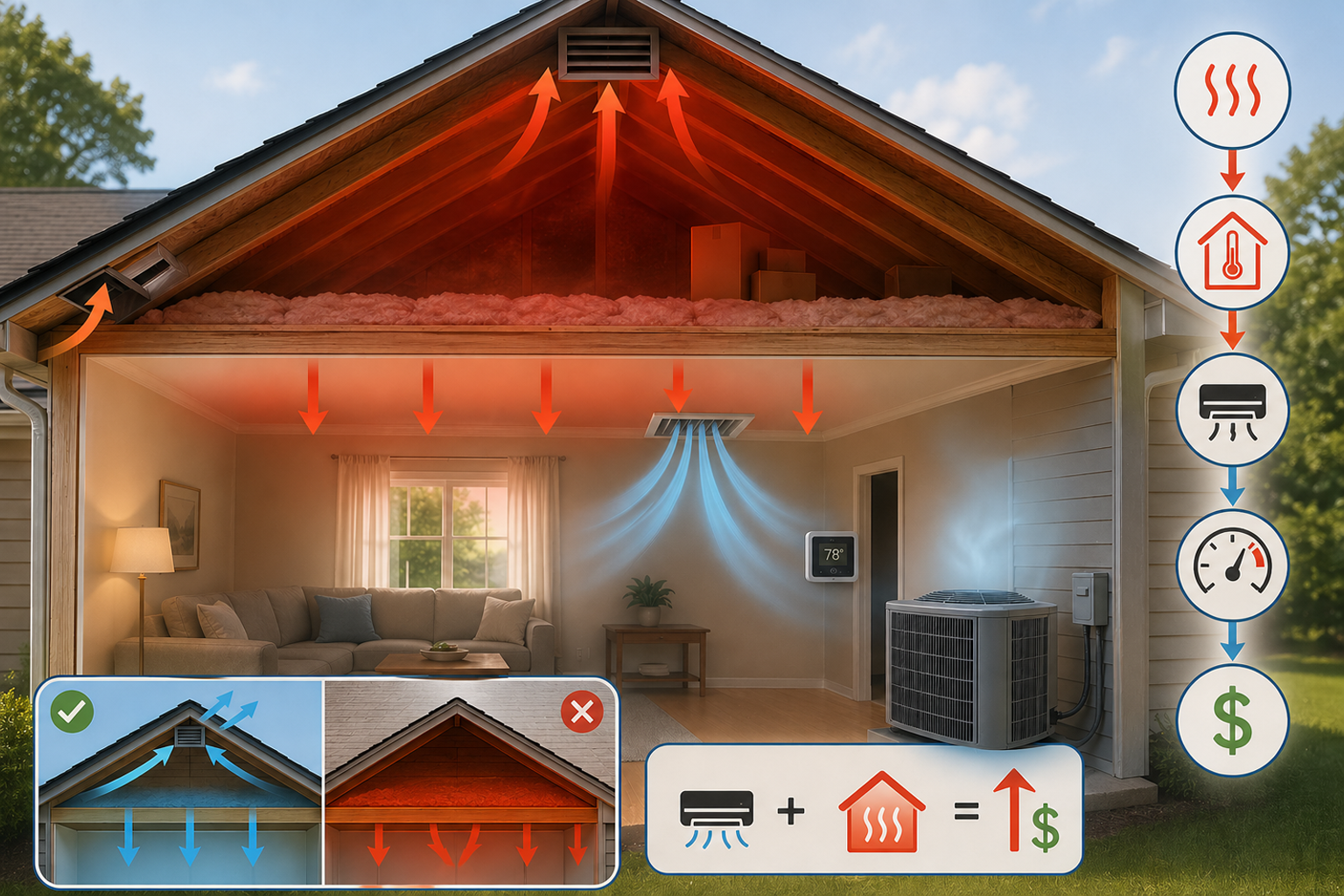
An illustration of heat transferring from the interior of the home, up to the attic, and out the attic vents.
The Hidden Heat Problem
During summer, your roof takes on direct sunlight for hours at a time. That heat doesn’t just disappear—it gets absorbed and transferred into your attic.
On a typical hot day, attic temperatures can climb well above 120–140°F.
Without proper roof ventilation, that heat gets trapped. There’s nowhere for it to escape, so it builds up and lingers—turning your attic into a heat reservoir sitting right above your living space.
Does Roof Ventilation Really Affect Energy Bills?
Yes—roof ventilation has a direct impact on how hard your cooling system has to work.
Here’s the simple chain reaction:
Hot attic air radiates downward into your home
Indoor temperatures rise, even with the AC running
Your air conditioner runs longer and more frequently
Energy usage increases
Utility bills go up
A helpful way to think about it: trying to cool your home with a poorly ventilated attic is like running your AC while an oven is on upstairs. The system is constantly fighting against extra heat.
Proper attic ventilation helps release that trapped heat, reducing the workload on your AC and helping stabilize indoor temperatures.
How Do I Know If My Attic Is Too Hot?
Most homeowners don’t regularly check their attic—but there are clear signs that heat buildup may be an issue:
Your AC runs constantly or struggles to keep up
Upstairs rooms feel hotter or stuffier than the rest of the house
Your summer energy bills seem unusually high
The attic feels extremely hot when you access it
Your home cools slowly, even in the evening
If any of these sound familiar, poor ventilation could be part of the problem.
How Poor Ventilation Impacts Utility Bills
When attic heat isn’t properly managed, your home becomes harder—and more expensive—to cool.
Here’s why:
1. Heat Transfer Into Living Spaces
Even with insulation in place, excessive attic heat can push warmth into your home.
2. Increased AC Runtime
Your air conditioner has to run longer cycles just to maintain your thermostat setting.
3. Higher Energy Consumption
More runtime means more electricity usage—and higher bills each month.
4. Reduced HVAC Efficiency Over Time
Constant strain can wear down your cooling system faster, potentially leading to repairs or early replacement.
Benefits of Proper Roof Ventilation
Improving your roof ventilation isn’t just about lowering bills—it improves your home overall.
Lower cooling costs during hot months
More consistent indoor comfort, especially upstairs
Less strain on your HVAC system
Longer roof lifespan by reducing heat stress
Better moisture control, helping prevent mold or damage
In short, ventilation helps your entire home system work the way it’s supposed to.
Why Most Homeowners Miss This
Ventilation issues often go unnoticed for one simple reason—they’re out of sight.
Your attic isn’t a space you check daily, and ventilation problems don’t always show obvious signs right away. Many homeowners assume:
The AC unit is too small
The system needs repair
High bills are just part of summer
While those can be factors, attic heat is often an overlooked contributor.
A Simple Step That Can Make a Difference
If your home feels like it’s working harder than it should to stay cool, it may be worth taking a closer look at what’s happening in your attic.
A professional roof and ventilation inspection can help identify whether heat buildup is affecting your comfort and energy use—and whether improvements could make a noticeable difference.
Conclusion
When it comes to high summer energy bills, the problem isn’t always your air conditioner.
It could be the heat trapped above your ceiling.
Proper roof ventilation allows that heat to escape, helping your home stay cooler, your system run more efficiently, and your energy costs stay more manageable.
Sometimes, the smartest way to lower your bills isn’t working your AC harder—it’s helping your home breathe better.
FAQ
1. How hot should an attic be in summer?
An attic will naturally be warmer than the outside air, but extreme heat (well over 120°F) may indicate poor ventilation.
2. Can better roof ventilation really lower energy bills?
Yes. By reducing heat buildup, your AC doesn’t have to run as long or as often, which can lower energy usage.
3. Is this something I can check myself?
You can notice signs like heat and airflow, but a professional inspection provides a clearer picture of whether your ventilation system is working properly.