
Why Your Roof Still Matters in Winter (And What Homeowners Should Watch For)
When most homeowners think about roof problems, they picture spring storms or summer hail. Winter, on the other hand, feels quiet. The roof looks the same. Nothing’s dripping. Everything seems fine.
But winter is often when small, overlooked issues quietly turn into expensive problems.
To help homeowners understand what really happens to roofs during cold weather, we sat down with Blake Roberts, a senior roofing professional, to talk through what he looks for when winter arrives—and what homeowners should be thinking about even when there’s snow on the ground.
Winter Roof Problems Usually Start Small
One of the biggest misconceptions homeowners have is assuming that if the roof doesn’t leak during rain, it must be fine.
In reality, winter introduces a completely different set of forces.
High winds can lift or blow off shingles. That missing shingle may never cause a problem during a normal rainstorm—but when snow builds up on the roof and starts to melt, water can become trapped. With nowhere to go, that moisture creates hydraulic pressure, pushing water into places it was never designed to go.
This is why Blake often tells homeowners to do something simple before winter: look at your roof from the ground.
If something looks out of place, it probably is.
Ice Dams and Snow Infiltration: The Real Winter Threats
When winter hits, the first concerns for roofers aren’t cosmetic—they’re structural and environmental.
Two of the biggest issues are ice dams and snow infiltration into attic spaces.
Ice dams form when heat escapes into the attic, melting snow on the roof. That melted water refreezes at the colder roof edge, forcing water back uphill under the shingles. Roofs are designed for water to flow downhill—once it’s pushed the opposite direction, damage can follow quickly.
Snow infiltration is less common, but very real. During heavy winds, fine, powdery snow can be pulled into attic vents. When temperatures rise, that snow melts inside the attic and shows up later as ceiling stains or moisture damage—often long after the storm has passed.
Modern Homes Create New Winter Challenges
Another issue homeowners rarely expect is moisture buildup inside the home.
As homes have become more energy efficient—with tighter house wraps, better windows, and sealed doors—they’ve also become less forgiving when it comes to moisture. In winter, furnaces run almost constantly. Many homeowners turn their humidifiers up, not realizing that excess moisture has to go somewhere.
That moisture often ends up in the attic, where it freezes. Over time, frost can build up in attic spaces, sometimes even forming icicles inside the attic itself. This isn’t usually caused by a roof failure—it’s a ventilation and insulation issue that shows up most often during cold weather.
Gutters Matter More Than You Think in Winter
Gutters play a much bigger role in winter roof performance than most homeowners realize.
Even gutters that were cleaned earlier in the fall can clog after the last leaves drop. When ice and snow build up, debris-filled gutters can’t drain properly. Water spills over the edge, freezes, and contributes to ice dams and long icicles forming along the eaves.
Proper gutter slope, clear downspouts, and leaf protection can all reduce winter-related roof issues—but only if they’re addressed before freezing temperatures set in.
Interior Warning Signs Homeowners Shouldn’t Ignore
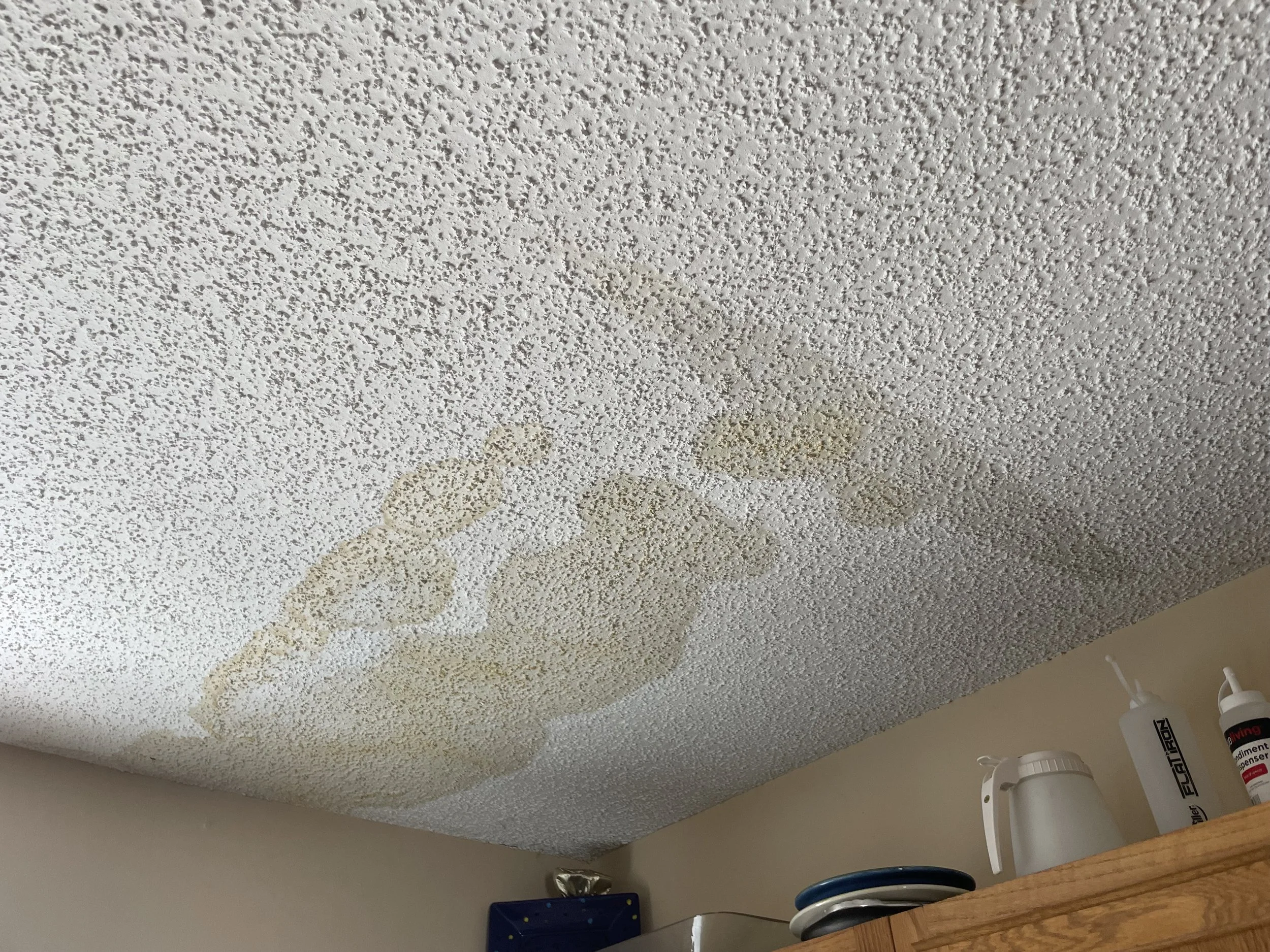
Not all winter roof problems announce themselves with dripping water.
Some of the most common warning signs include:
Small, round water stains near exterior walls
Faint ceiling discoloration near the center of the home
Tape joint staining that appears after cold weather
These marks are often the result of past ice damming or snow infiltration and may only become visible once the moisture dries. They’re easy to miss—but they’re important clues that something is happening above the ceiling line.
What Homeowners Should Not Do in Winter
One of the most dangerous mistakes homeowners make is trying to remove ice dams themselves.
Climbing ladders, using hammers, hatchets, or ice picks on a frozen roof often leads to injuries—or worse, punctured roofing materials that cause even more damage. In many cases, it’s safer to leave the ice dam alone and address the underlying causes once conditions improve.
Winter roof safety is about prevention and planning, not emergency DIY fixes.
The Least Expensive Winter Fix Is Preventative
The most affordable winter roof solution is also the most overlooked: regular inspections and maintenance.
Having a professional inspect your roof before winter provides a baseline. You know the condition of your shingles, penetrations, insulation, and ventilation. That documentation makes it easier to decide whether small repairs, added insulation, or future replacement makes sense.
As Blake puts it, your roof is no different than a vehicle—ignore routine maintenance long enough, and the repair costs only go up.
The Best Way to Avoid Winter Surprises
For homeowners who want peace of mind during winter, the advice is simple:
Schedule a professional roof inspection and ask for written documentation with photos.
That report gives you a snapshot of your roof’s condition today—and a reference point for years to come. It’s one of the easiest ways to avoid surprises when winter weather puts your home to the test.